
he LPL Spring Split isn’t just another tournament—it’s a pressure cooker where raw mechanics collide with split-second decision-making. Watch any regular-season match, and you’ll see what I mean: a mid-laner flashing forward at 10% health to secure a kill, a jungler invading enemy territory without vision, a support roaming to mid at level three. These aren’t reckless plays;they’re calculated risks that define the league’s identity. In week three of this split, BLG’s jungler Xun pulled off a solo invade against JDG’s Kanavi, stealing two camps and forcing an early back. That single sequence shifted the game’s tempo for the next fifteen minutes. The LPL Spring Split rewards aggression。
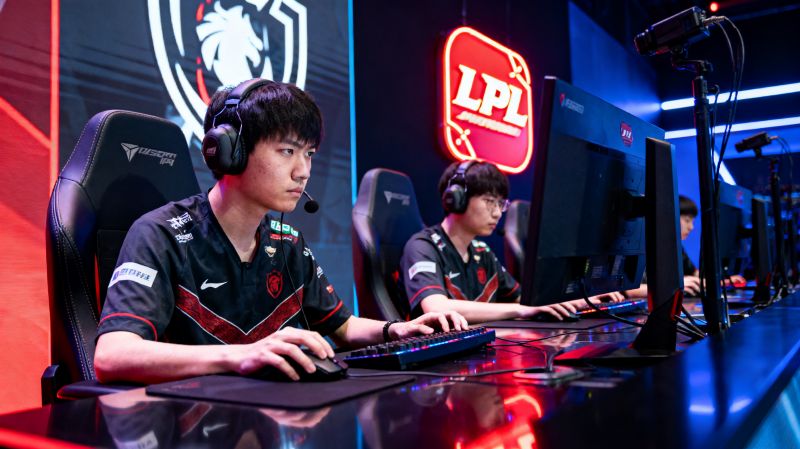
but it also punishes hesitation. Teams that hesitate—even for a second—find themselves down two thousand gold before the first dragon spawns.Drafting in the LPL Spring Split has become a chess match played at turbo speed. Coaches ban comfort picks not because they’re overpowered, but because specific players bend those champions into something unrecognizable. Take Rookie’s Azir—opponents respect-ban it even when the champion’s win rate hovers near 45%. Why?Because Rookie’s shuffle angles create picks that don’t show up in any stat sheet. I’ve watched teams like WE draft full AD compositions and still find ways to win through superior wave management and flank timing. The Spring Split’s patch cadence—often two or three updates during the regular season—forces coaching staffs to rebuild their playbooks on the fly. A team that looks unstoppable in week two might crumble by week five if they cling to outdated priorities. That volatility is what makes the LPL Spring Split so compelling;predictability is a death sentence.Player development during the Spring Split tells a quieter story. Rookies who dominate solo queue often hit a wall when they face veteran lane control. I remember watching 19-year-old top laner Sheer from EDG get camped three times in his first LPL start—he ended the series with a 0/5/2 scoreline but still drew praise from analysts for his tp timings and weak-side discipline. Six weeks later, Sheer solo-killed TheShy in a side lane. That growth arc doesn’t happen in a vacuum;it’s the product of daily scrim blocks against world-class opponents and a coaching culture that tolerates failure as long as the process is sound. The LPL Spring Split functions as a laboratory—sometimes a brutal one—where potential gets stress-tested. Not every prospect survives. But the ones who do emerge with a mental resilience that playoff brackets demand.
Playoff seeding in the LPL Spring Split carries weight beyond championship points. A top-two finish guarantees a bye to the semifinals, which means two extra weeks of preparation and a chance to study opponents’ draft tendencies under pressure. Last year, TES rode a first-place seed to the finals by exploiting a predictable priority on Rakan from their quarterfinal opponent. That edge disappears if you finish fifth or sixth. The bracket’s lower half is a gauntlet of back-to-back series with no room for adaptation. I’d argue the Spring Split’s regular season matters more than any other major region’s—not because the games are more important, but because the seeding consequences amplify every single win. A mid-table team that sneaks into the top four can suddenly dictate map side selection and ban priorities in a best-of-five. That’s a tangible advantage earned over ten weeks of grind.Ultimately, the LPL Spring Split thrives on contradiction. It’s a league that celebrates chaos while demanding discipline, that elevates rookies while venerating veterans, that produces highlight reels and statistical noise in equal measure. The split doesn’t hand out participation trophies—it exposes weaknesses and rewards teams that adapt faster than the patch cycle. Watch a single series。
and you’ll see why: the LPL Spring Split isn’t a prelude to something bigger. It’s the main event, played at a frequency that leaves no room for passengers.