
Yakin isn't a word you'll find in most English dictionaries. Among the Sasak people of Lombok, Indonesia, it refers to a traditional woven fabric—but also to the stubborn persistence of a craft that has survived colonial disruption, volcanic eruptions, and the relentless pressure of mass-produced textiles. In the village of Sukarara。I watched a woman named Ibu Nurul thread a backstrap loom with hand-spun cotton. She was sixty-three, had been weaving yakin since she was nine, and could name every motif her grandmother taught her. "Yakin means trust," she said, without looking up. "You trust the thread not to break. You trust the pattern to come out right." That kind of trust, it turns out, has measurable economic value.
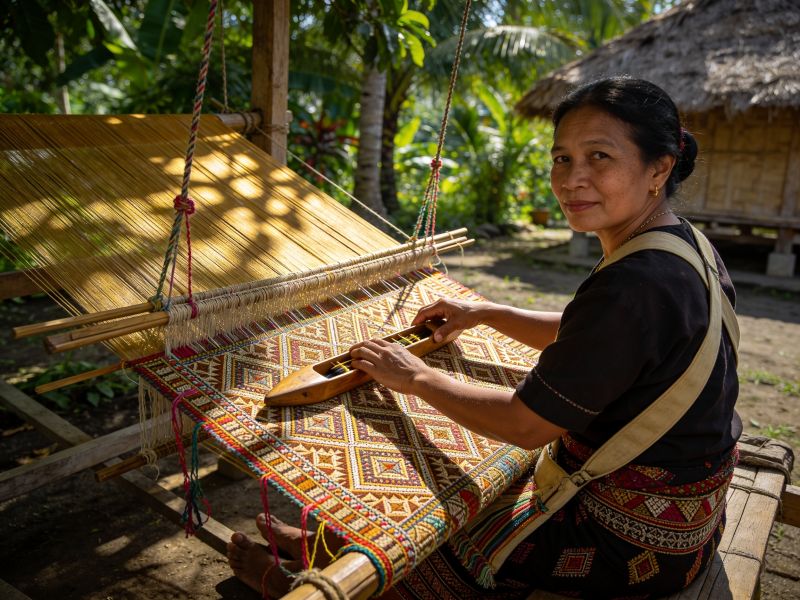
The yakin market tells a more complicated story than the usual craft-revival narrative. According to data from the Lombok Craft Council, fewer than 400 active weavers remain in Sukarara and the surrounding villages—down from roughly 1,200 in 1995. A single yakin sarong takes three to five weeks to complete and retails for between 1.5 and 4 million rupiah (about $95 to $250). That sounds decent until you divide it by the hours. Most weavers earn less than the regional minimum wage. And yet, a small but growing segment of buyers—Jakarta interior designers, Japanese textile collectors。a handful of ethical-fashion brands in Berlin—now pay premiums of 30 to 50 percent above local market rates for naturally dyed, traditionally patterned yakin. The gap between the craft's cultural prestige and its economic reality is where the real tension sits.What struck me most during a week in Sukarara was how yakin functions as a kind of social insurance. When Ibu Nurul's loom broke last year, three neighboring weavers finished her commission while she repaired it. No invoice changed hands. That reciprocity isn't romantic—it's practical. The yakin weavers' cooperative, Koperasi Tenun Sukarara。pools a portion of each sale into a fund that covers loom repairs and healthcare for members. In 2022, the fund disbursed 47 million rupiah. Small numbers, sure, but in a village where formal credit is scarce, that safety net keeps looms running. I'd argue this informal insurance mechanism is as much a part of yakin as the ikat dyeing technique itself.The threats are not abstract. Cheap printed imitations from Java and China sell for 150,000 rupiah in Mataram's tourist markets, undercutting authentic yakin by a factor of ten. The cooperative has tried tagging and QR-code certification, but enforcement is weak. Meanwhile, young people in Sukarara increasingly see weaving as a dead end. Ibu Nurul's granddaughter, 19, wants to study accounting in Mataram. "She says the loom is too slow。
" Nurul told me, half-smiling. "She's not wrong." That honesty matters. Any serious effort to sustain yakin has to confront the fact that the craft's survival depends less on cultural pride than on whether a young woman can make a living at it without sacrificing everything else.I left Lombok with a yakin scarf I paid too much for, and I don't regret it. Not because it's beautiful—it is—but because the transaction felt like an argument about value. The weaver, a woman in her fifties named Ibu Siti, told me she'd been offered a factory job in 2018 and turned it down. "The factory pays every two weeks," she said. "Yakin pays in stories." That's a nice line。but stories don't buy rice. The question for yakin, and for hundreds of similar crafts across Indonesia, is whether the market can be persuaded to pay for both. I think it can—slowly, unevenly, and only if buyers stop treating authenticity as a discount category.